Black and White Bathroom Design: The Timeless Appeal of Contrast
How natural stone, timber and Crittall-style details create a contemporary bathroom that feels considered rather than overly designed
There are some combinations in interior design that never really go out of fashion.
Black and white is one of them.
Used carefully, the contrast can create a bathroom that feels crisp and contemporary without becoming cold or overly minimalist. But the success of a black and white bathroom is rarely about the colours alone. It comes from what sits between them: texture, material, proportion, light and the smaller details that bring the whole space together.
In this bathroom renovation, the starting point was a relatively simple palette of white, black and natural tones. From there, the design developed through terrazzo surfaces, a sculptural stone basin, timber detailing, matte black fittings and a Crittall-style shower screen.
The result is a bathroom that feels modern, but not tied to a particular moment in design.
A classic palette with a contemporary interpretation
Black and white bathrooms have been part of interior design for decades.
What changes is the way the combination is interpreted.
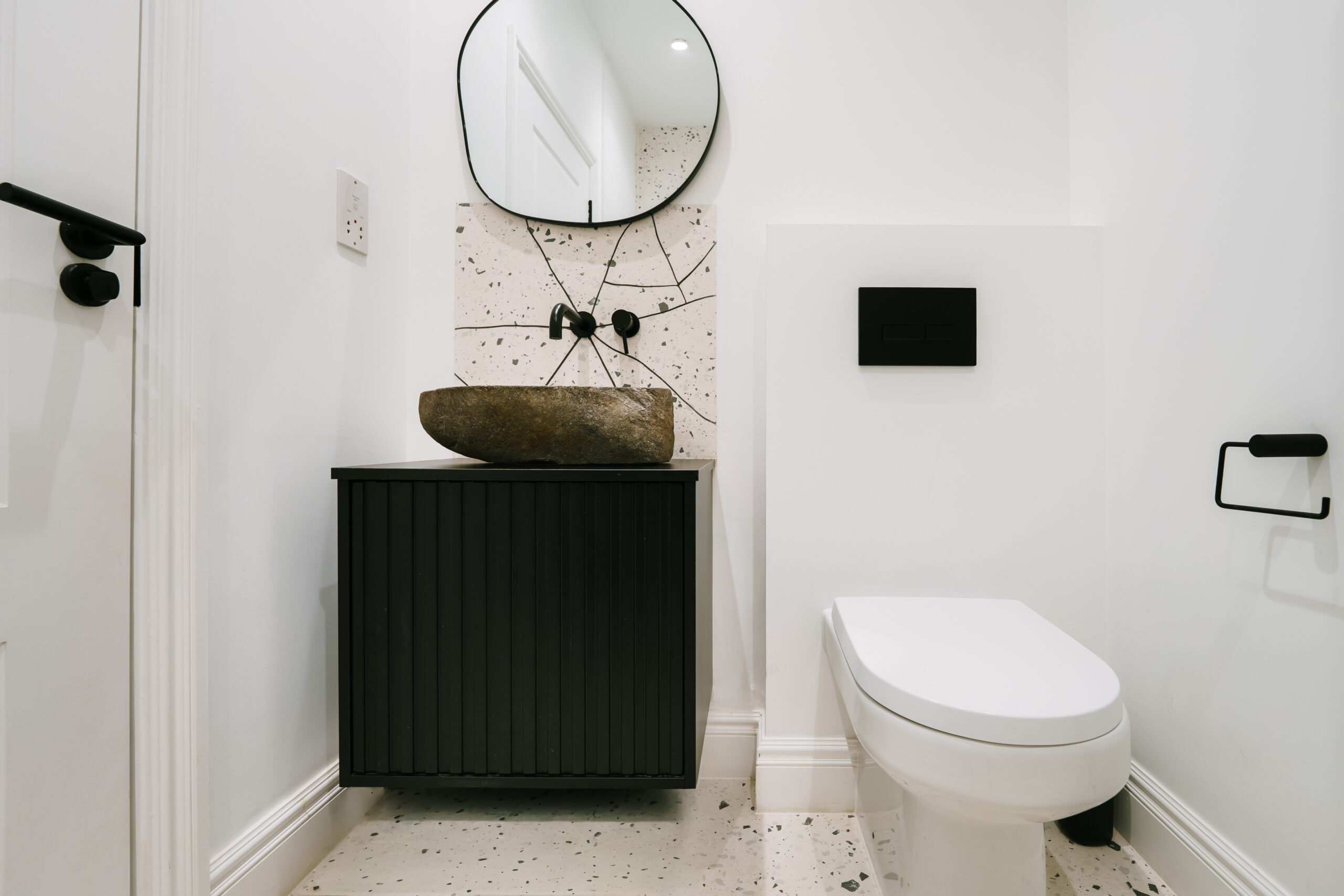
Rather than using large areas of solid black and white, this project uses contrast through individual architectural and interior elements. White walls provide a calm backdrop, while black appears selectively through the sanitary fittings, mirror frames, cabinetry and shower enclosure.
This creates a visual rhythm throughout the room.
The black elements are strong enough to define the space, but restrained enough to allow the natural materials to remain visible.
That balance is important.
A successful bathroom renovation should not simply follow a trend. It should create an environment that continues to work visually and practically long after the project has been completed.
The importance of texture in a black and white bathroom
When working with a restricted colour palette, materials become even more important.
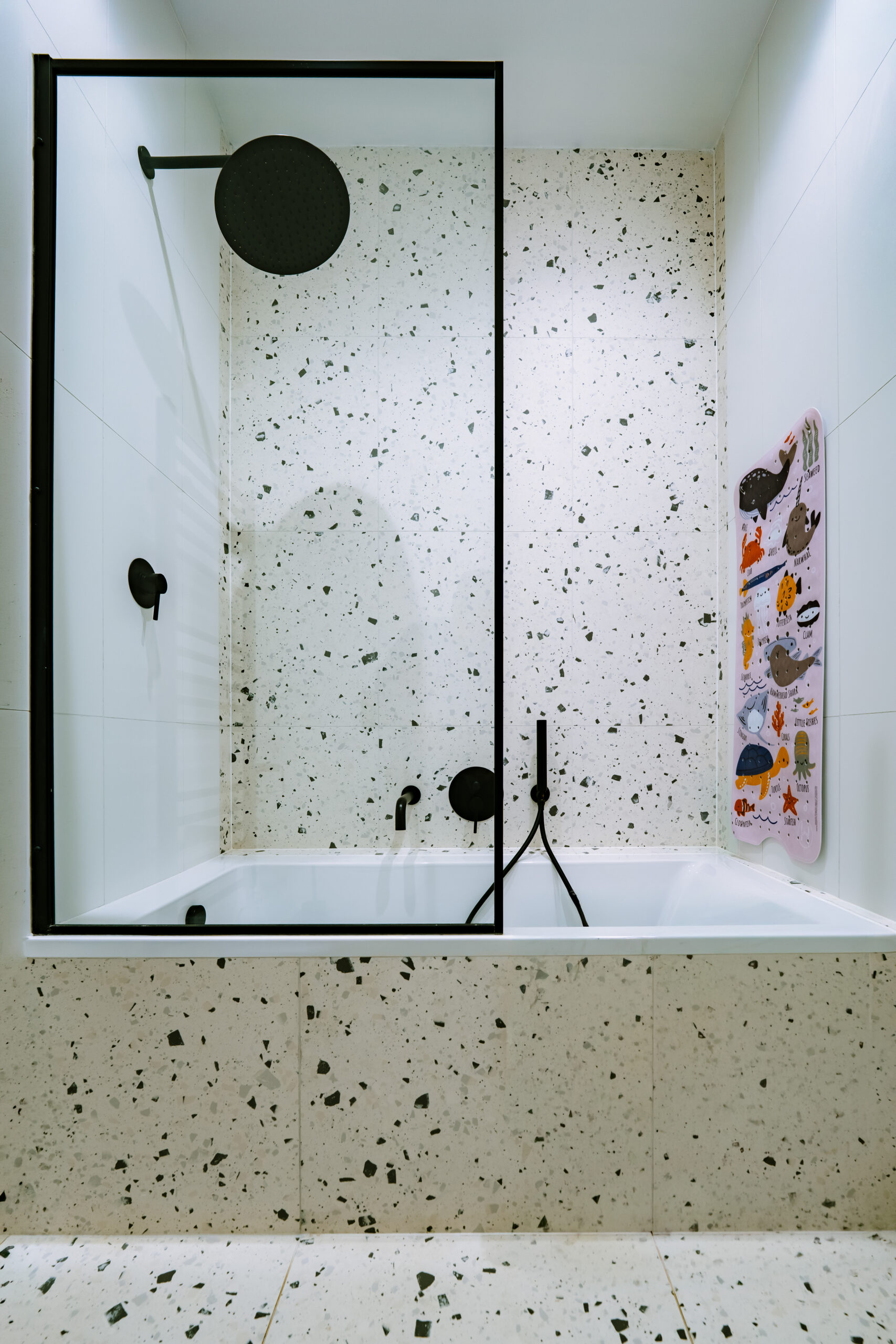
Without variation in texture, a monochrome bathroom can easily feel flat. Here, the terrazzo introduces movement across the floor and walls, with its irregular aggregate creating a softer contrast against the clean white background.
The natural stone basin adds another layer.
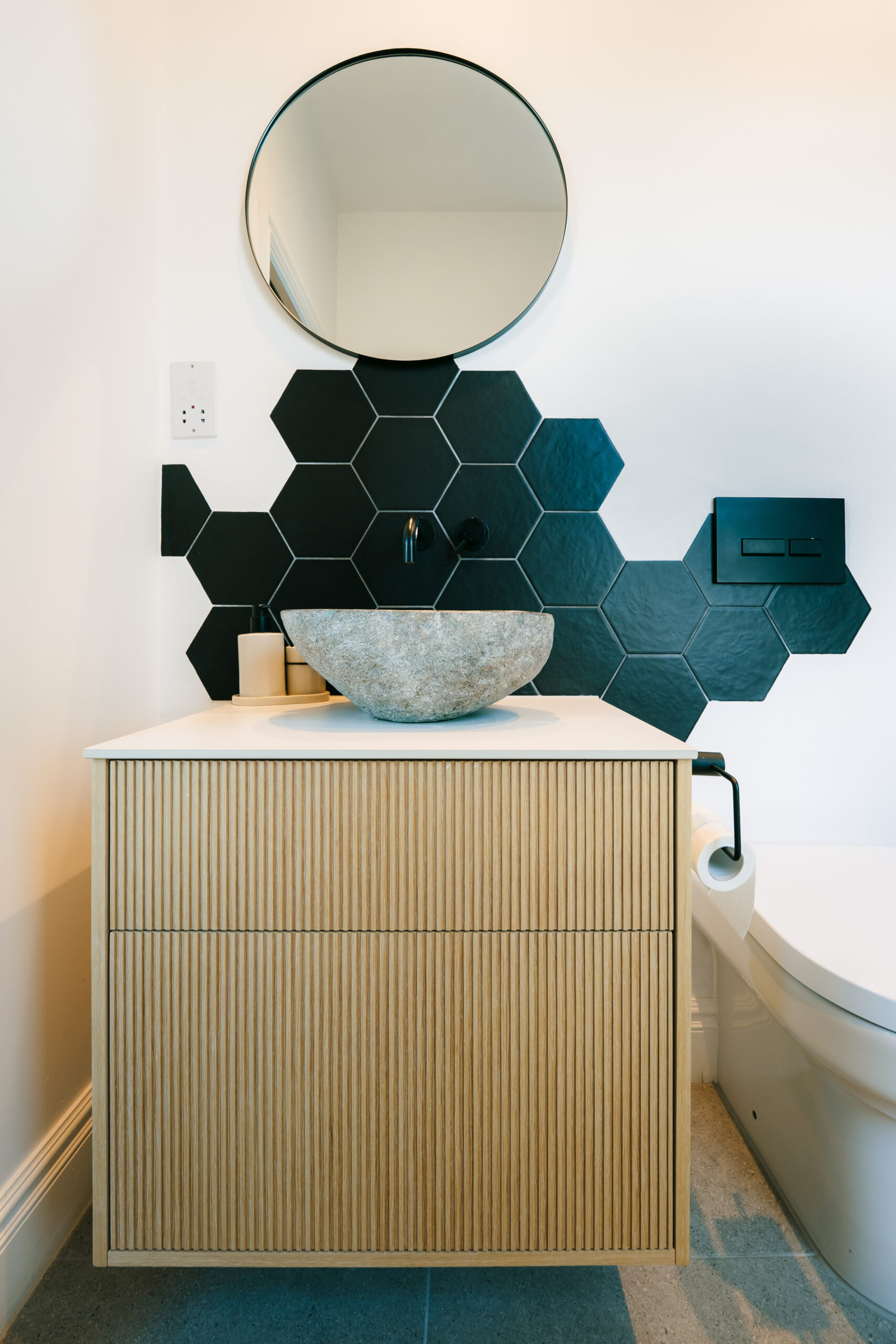
Its irregular shape and tactile surface contrast with the more precise geometry of the vanity and sanitaryware. Rather than everything being perfectly uniform, the room combines manufactured surfaces with materials that retain a sense of natural variation.
This is one of the reasons terrazzo works particularly well in contemporary bathroom design. It provides visual interest without introducing a strong additional colour palette.
The small variations within the material allow the black and white elements to remain the dominant visual language.
Crittall-style shower screens as an architectural feature
The shower screen is one of the defining details of the bathroom.
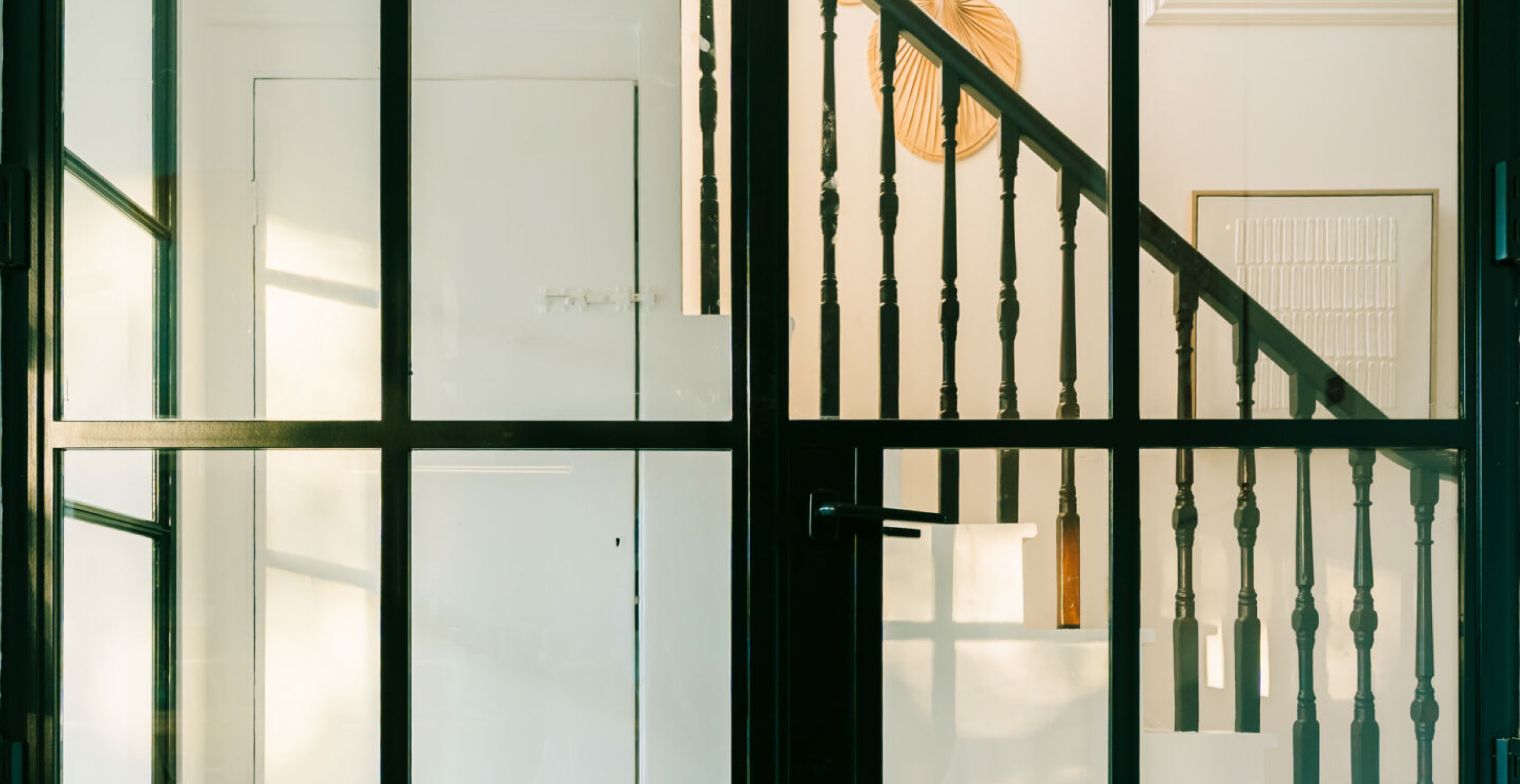
Crittall-style glazing has become increasingly popular in residential interiors because it offers a practical division while maintaining a sense of openness. The slim black framework gives the shower a strong architectural presence, while the glass allows light to pass through the space.
In this bathroom, the effect is particularly effective against the terrazzo wall.
The black frame creates a strong outline around the shower area, turning what could have been a purely functional element into part of the overall design.
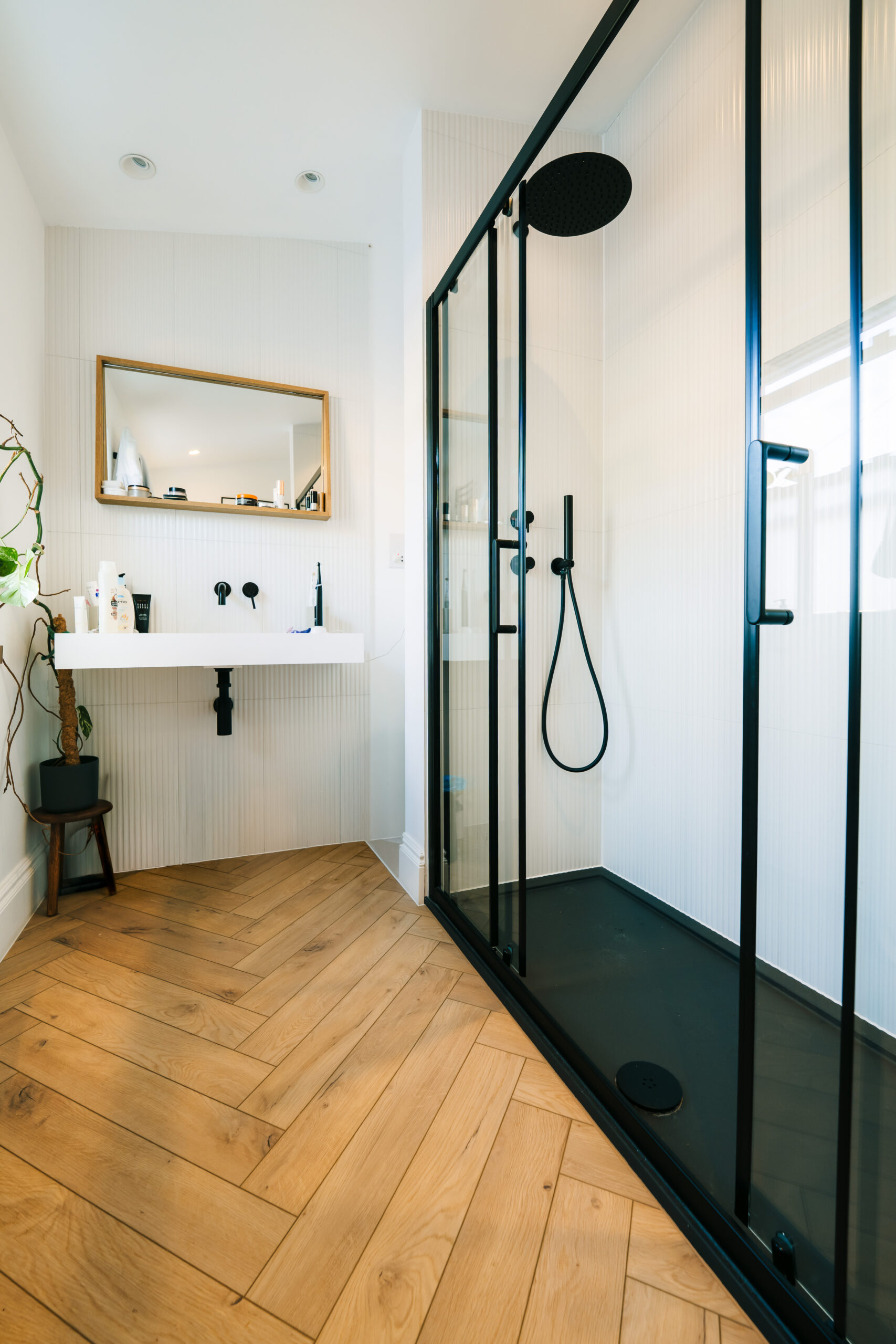
The same black finish is repeated through the shower fittings, taps and smaller details, creating continuity between the different areas of the room.
It is a simple design principle, but one that can make a significant difference: repeat a material or finish in several carefully chosen locations and individual elements begin to feel like part of the same composition.
Black bathroom fittings against a white backdrop
There is a reason matte black bathroom fittings remain so popular.
Against a white background, they create an immediate sense of definition.
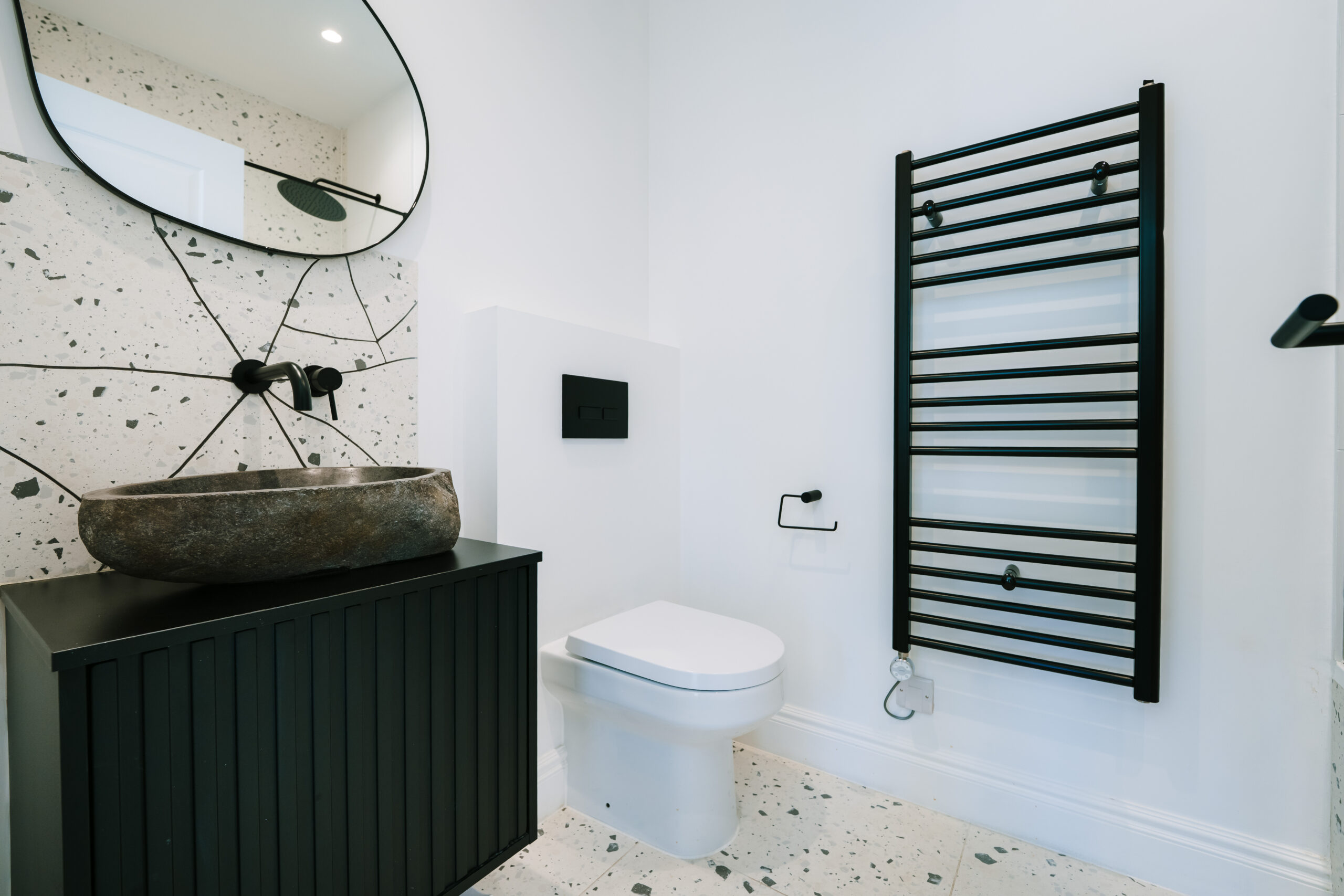
But rather than using black everywhere, we have kept it concentrated around the elements that naturally attract attention: the taps, shower fittings, mirror frame, flush plate and radiator.
This gives the bathroom a graphic quality without making it feel visually heavy.
The mirror is particularly important in this composition.
Its soft, organic shape contrasts with the straight lines of the cabinetry and the geometric pattern of the terrazzo. This introduces another layer of contrast, this time between curved and linear forms.
The result is more nuanced than a simple black-and-white colour scheme.
Natural stone brings an element of individuality
One of the most distinctive features of the room is the stone basin.
Its shape is intentionally different from the clean geometry of the rest of the bathroom. Rather than selecting a perfectly symmetrical basin, the natural form introduces an element of individuality.
This is an important consideration when designing contemporary bathrooms.
Modern interiors do not necessarily need to be perfectly uniform. In fact, combining precise architectural elements with natural materials can make a space feel considerably more sophisticated.
The stone works particularly well with the terrazzo because both materials have their own natural variation. They add depth to an otherwise restrained palette and prevent the room from becoming overly clinical.
Timber adds warmth
Black, white, terrazzo and stone could easily create a very cool interior.
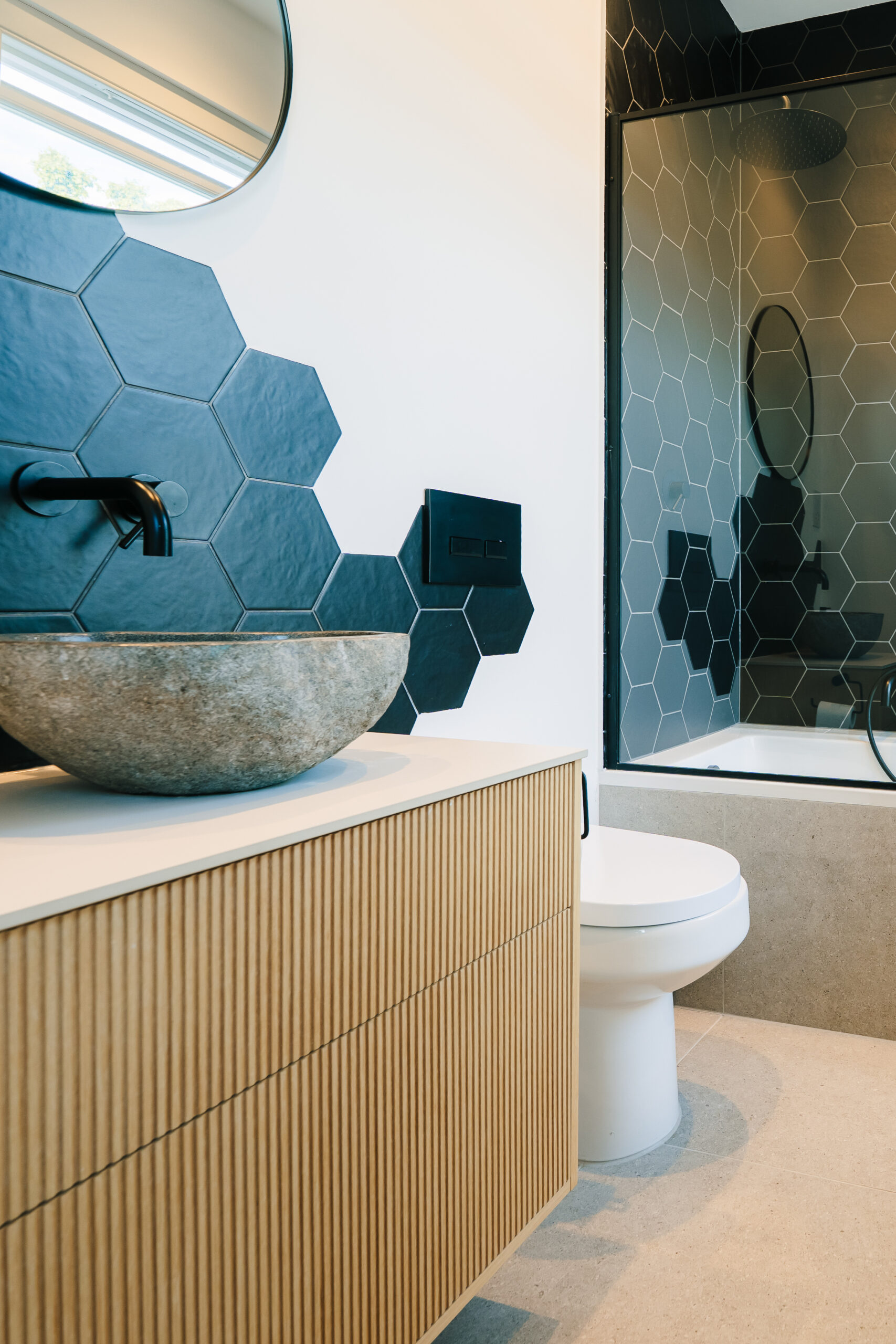
The timber vanity changes that.
The vertical detailing introduces warmth and a softer tactile quality, while the natural tone sits comfortably alongside the stone basin and terrazzo.
It also creates another subtle contrast: the darker, more architectural black elements are balanced by the warmth of the timber.
This is something we consider carefully when developing a bathroom interior.
Colour is only one part of the palette. Materials have their own temperature, texture and character, and combining them thoughtfully can completely change how a room feels.
Designing the bathroom as part of the home
A bathroom should not feel like an isolated room that has simply been filled with sanitaryware.
It should belong to the architecture of the house.
In a period property, for example, contemporary bathroom fittings can sit alongside traditional skirting boards, doors and architectural details. The contrast between old and new can become part of the character of the renovation rather than something that needs to be disguised.
Here, the clean white walls and traditional detailing provide a quiet architectural framework, while the terrazzo, black fittings and Crittall-style glazing introduce a contemporary layer.
The result is modern without feeling disconnected from the wider home.
Small details make a big difference
Some of the strongest design decisions in a bathroom are not necessarily the largest ones.
The choice of a black radiator, the shape of the mirror, the finish of the taps or the way a shower screen meets the surrounding surfaces can all influence the final result.
These details become particularly important in a smaller room because there are fewer elements competing for attention.
Rather than treating these components as purely functional, they can be considered as part of the overall interior design.
This is where a well-resolved bathroom renovation moves beyond simply replacing fixtures and fittings.
Every element contributes to the finished space.
A bathroom that is contemporary without following a trend
There is a temptation with interior design to think about what is currently fashionable.
But the strongest interiors often come from a different approach.
Instead of asking what is trending, the more useful question is: what will continue to look and feel right in five or ten years?
Black and white provides a strong foundation because it is not dependent on a particular colour trend. Terrazzo adds texture, natural stone adds individuality, timber brings warmth and Crittall-style glazing introduces an architectural quality.
Together, these materials create something more enduring than a purely decorative scheme.
The design is contemporary, but it is not trying too hard to look contemporary.
And that distinction matters.
The role of design in a successful bathroom renovation
A bathroom may be one of the smallest rooms in a home, but it requires a surprising amount of coordination.
Layout, plumbing, lighting, waterproofing, sanitaryware, joinery, tiling and finishes all need to work together.
The design therefore needs to be considered before construction begins.
Material selections need to be resolved, details need to be coordinated and the relationship between each element needs to be understood before it reaches site.
This is particularly important when combining bespoke elements with specialist finishes such as terrazzo, natural stone and architectural glazing.
At We Love Build, our design and build approach brings design and construction together from the beginning. Our recent approach is based on keeping designers, project managers, procurement and construction specialists connected throughout the project, rather than treating each stage as a separate process.
The enduring appeal of black and white
A black and white bathroom does not have to be stark.
With the right materials, it can be warm, tactile and highly individual.
In this renovation, the simplicity of the colour palette creates the framework, while terrazzo, natural stone, timber and Crittall-style detailing provide the depth.
The black fittings add definition. The natural materials soften the contrast. The glass keeps the shower visually open.
Together, these details create a bathroom that feels carefully designed rather than simply decorated.
And perhaps that is the real strength of black and white bathroom design.
It provides a timeless starting point, but leaves enough room for materials, craftsmanship and architecture to tell the story.
Design & Build in London
At We Love Build, we combine design, project management, procurement and construction within one integrated team. Our in-house specialists work together to deliver complete London home renovations, from the initial design through to the final finish.
The result is a more connected approach to renovation — with one team, one process and one shared responsibility for the finished home.
Renovate your property in London with We Love Build
Want to transform your home with a team of experienced renovation contractors in London? To arrange a free design consultation, simply contact us. In the meantime, take a look at some of our other residential renovation projects in London – our art-deco inspired Addison Garden renovation, the Japandi-esque Kentish Town renovation, and our impressive Lucerne Road refurbishment will all give you plenty of inspiration for your own project!